
Our yellow wellies are back in full time employment as equinoxial storms batter this tattered fringe of Scotland. The sailing school has had its annual transformation into a wood store. Cruise boats and yachts visiting the cafe have dwindled; we may be forced to eat up the final batches of brownies and scones ourselves.
This time last year I wrote of a population issue on the island, for both man and beast. We need beasts to graze the grassland areas to maintain their rich plant diversity. We need man- (and of course woman-) power to meet the physical demands of keeping the place running. And, of course, no man is an island: living alone on a windy rock isn’t good for the human condition.
We haven’t solved the beast issue: our remaining highland steer shuffled off this mortal coil in early spring. But we’re hoping to borrow a few sheep from the mainland for some seasonal grazing, once we’ve repaired the antique fences to keep the nibblers away from the brave young trees.
Regarding the human population issue: well, we have increased it by 50%, but our chosen method won’t reduce the work load for a good few years! Our baby Rosie arrived on 1st August and, six weeks on, she is certainly still a net contributor to the physical labour
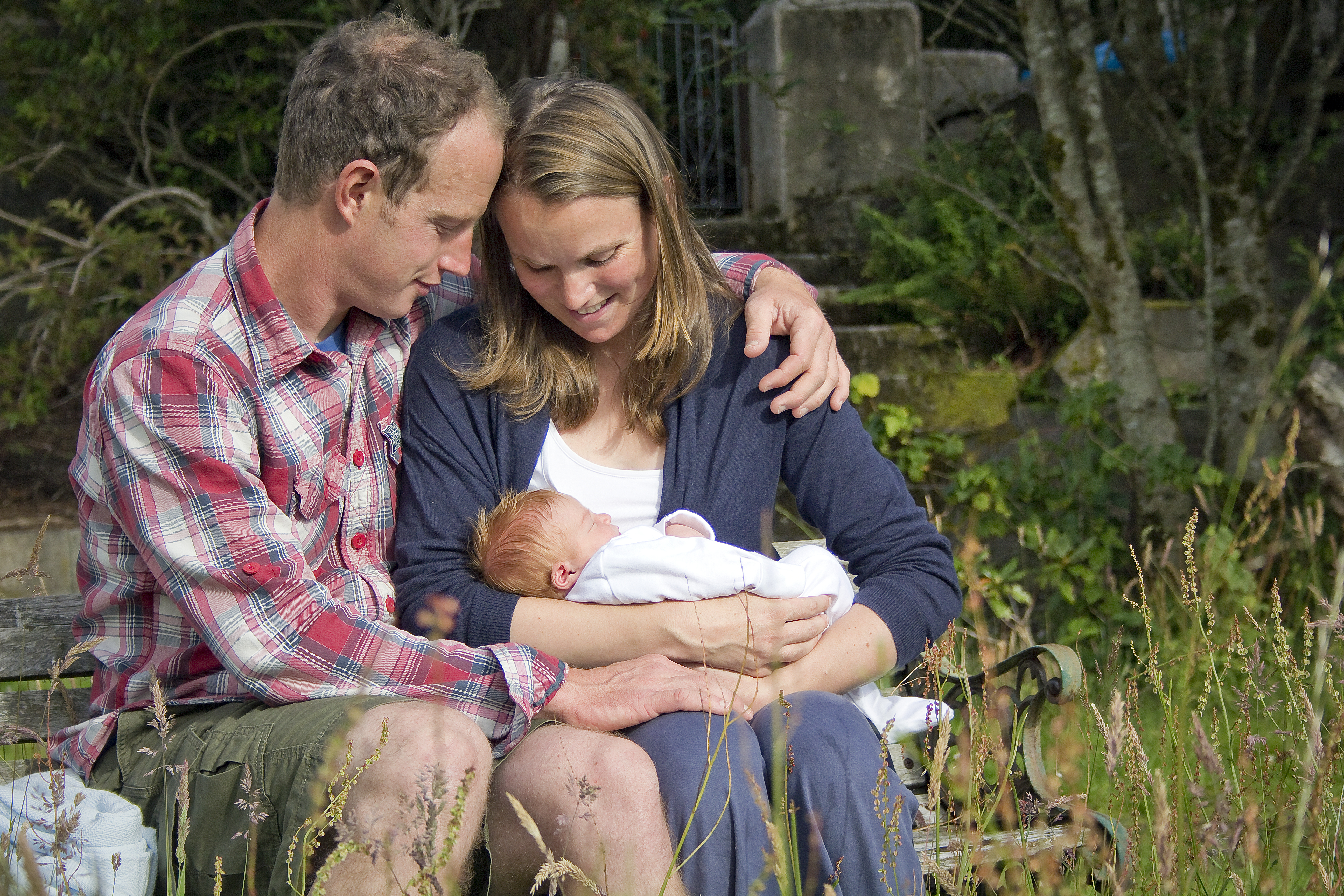
Rosie with her parents, by Anne McGee
requirements…but I am grateful that she is sleeping peacefully beside me just now, letting me write this column.
She is of course – in our humble opinion – totally wonderful (we’ve become just the sort of embarrassingly besotted parents we used to deride) and seems happy with Island life. The deep rumble of Patricia’s engine has her sleeping soundly within seconds of leaving the pier. The sea ‘breeze’ ruffles her Celtic head-full of red hair and she purses her lips stoically but doesn’t squeak.
Rosie was born in Raigmore Hospital in Inverness and we spent a couple of weeks each side of ‘the event’ living with my parents in Achiltibuie on the mainland. Since my family moved to Tanera in the mid-90s there have been three other babies living on the Island, but homebirths aren’t encouraged out here: it’s a long drive (or an expensive helicopter flight) to hospital if things go wrong.
With Rosie strapped to my front I scramble through the brambles that crowd the ruined cottages, harvesting blackberries. It is astonishing to think that these houses were once filled with children, born far from medical help. The Schoolhouse, now a holiday cottage (this week home to a knitting retreat), was 100 years ago a classroom for 20 pupils.
Last year the Island’s rowan trees totally failed to fruit; today the sheltered hillside is lit up with glossy scarlet berries, boughs sagging under their weight. I suppose productivity and populations come and go in natural cycles, and perhaps Tanera will one day be again full with children. In the meantime we’ll enjoy our little one, and the crows and fieldfares can enjoy the rowan berries.
[EWW1]The machine is telling me that this isn’t a word. I’m sure you know the right one.
 Wilder Words