
The island is closed for business from November to March, but still we have visitors.
A sodden winter Monday morning: grey sky, brown bracken, grey sea. We’re huddled around coffee mugs, peering out at the day through foggy double glazing.
A whir of wings, a sky full of babble, and every tree in sight is crowded with small plump birds: a gang of Bohemian waxwings has arrived. A small flock has been roaming the rowans on the mainland, but here are a couple of hundred of the appropriately chatty Bombycilla garrulous.
With jaunty head crest, red and gold wing decorations and a cheerful trill, these birds have certainly brightened a drab day. Like school children they dash around the sheltered wooded slopes of the island. Resident blackbirds and thrushes cluck testily, indignant to be sharing their bumper crop of berries with these mohawked hooligans.
Five days later the nomadic waxwings disappear as abruptly as they arrived, leaving every rowan tree stripped bare. They’re off to ransack someone else’s berries before returning to northern latitudes to breed. At least they’ve left the grazing intact…
Meanwhile, our patches of species rich grassland remain perilously grazerless since the ‘departure’ of our highland steer last spring. Old tall stems die and slump, smothering fresh growth. Bracken and heather are encroaching. Mechanical mowing options are limited, expensive and/or labour intensive. We needed some beasts to unclog the pastures through the winter and leave them ready to bloom.
Transporting animals to the islands for seasonal grazing is not a new idea; the name ‘Summer Isles’ probably refers to their use as a summer pasture when cattle were the crofters’ main livestock. Now cattle have been replaced by sheep, many of the other Summer Isles are used for winter grazing instead.
Angus Macleod, an Achiltibuie crofter, was delighted to have some new winter pasture for his wethers (castrated male sheep). Most locals keep bulky white Cheviots, but Angus has Hebridean sheep.
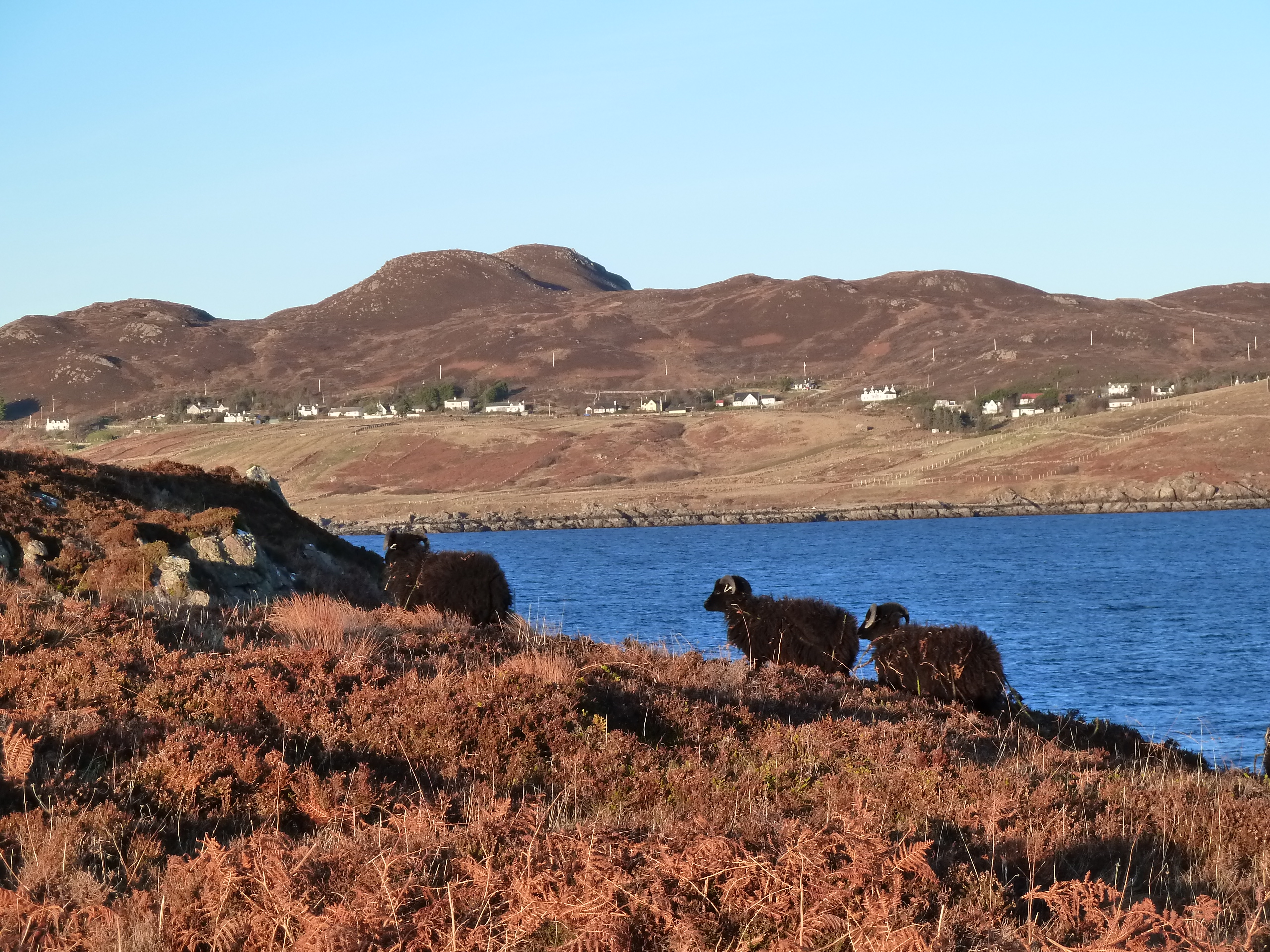
Black sheep ~ blue skies
These dainty black creatures with small curled horns and a wild hairy fleece are descendants of the sheep kept by our Iron Age ancestors. They are hardy enough to withstand the fierce weather of the western isles and, because they can survive on low-energy vegetation and don’t have the same nibble-all tendencies as other sheep, Hebrideans are now being used as ‘conservation grazers’ in national parks and sensitive ecosystems.
So it was a privilege to load up Patricia with 18 of these special ‘historical’ animals. Their small bodies and horn ‘handles’ made them easy to pass aboard. We chose a calm day for the crossing (only Ron the sheepdog seemed to suffer seasickness) and the sheep seemed immediately at ease as they explored their new home in the wintry sunshine.
Of course it’s not all straight-forward. The sheep seem particularly attracted to the sweet grass beneath brambles. Unfortunately the brambles are particularly attracted to their long fleeces and, being so small, the sheep aren’t strong enough to pull themselves free: their ‘Power: Velcro’ ratio is wrong. I just hope they sort themselves out in time to do some useful eating before spring.
 Wilder Words